
Reviewed · COSTA ADEJE TOURS
Costa Adeje | Cetacean sighting in Tenerife South
Pilot whales often surface close to the boat here, but the best part of this small-group eco tour is the way it lets you watch without turning the ocean into a noisy spectacle. Papacho 2 carries no more than 10 people, and the boat sits low enough for a clear view at water level. Biologist David and skipper Mirna explain what you are seeing, from family groups of pilot whales to dolphins, turtles, flying fish, and seabirds.
I especially like the hydrophone, which lets you hear whale sounds once the engine is off, and the crew’s careful approach to wildlife. You may spend time simply drifting and waiting rather than chasing animals, so sightings are never guaranteed. Bring sun protection, and take motion-sickness medicine before boarding if you need it.
Key things to know before you book
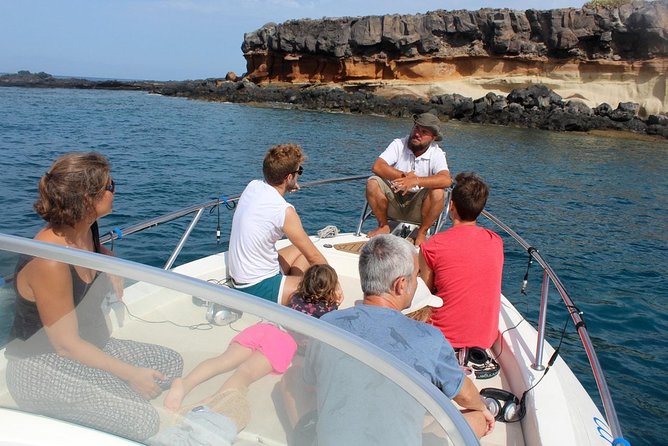
- A maximum of 10 people: The small boat gives you room to move around and ask questions without shouting over a crowd.
- A real marine biology lesson: David explains pilot whale behavior, local sea conditions, conservation, and the animals’ role in Tenerife’s waters.
- A hydrophone on board: When the engines stop, you can listen to whale calls used for communication and hunting.
- Wildlife is approached with care: The crew may leave an area if too many boats are already nearby, rather than add pressure to the animals.
- A low boat means close views: Papacho 2 places you near the water, which can make pilot whales and dolphins feel startlingly close.
- Plan for sun and motion: The 2.5-hour trip offers little shade, and rough seas can affect even experienced boat passengers.
Why this Costa Adeje whale trip feels different
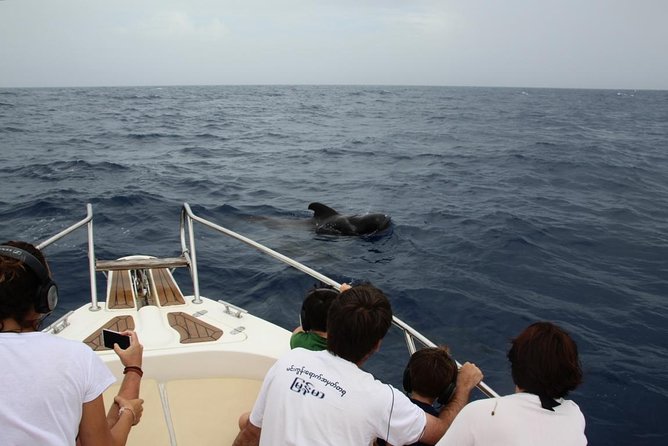
Tenerife’s south coast is not simply a place where boats head out and hope for luck. The waters around the island are home to resident short-finned pilot whales, along with dolphins, turtles, seabirds, and other marine life. The volcanic island rises sharply from the ocean floor, creating deep water near the coast. That helps explain why cetaceans can be found within a relatively short boat ride from Puerto Colón.
This experience makes that setting part of the lesson. You are not only looking for a fin. You are learning how the animals live, how researchers identify individual whales, and why careful boat handling matters. The crew uses a photo catalogue to recognize pilot whale families by their dorsal fins. That turns a passing sighting into something more personal and specific.
The trip costs about $71.35 per person and lasts around 2 hours and 30 minutes. That is more than a basic harbor cruise, but the price includes a very small group, an expert biologist, a dedicated skipper, and the chance to hear the animals through a hydrophone. If you want loud music, a party atmosphere, or a large buffet-style boat ride, this is not the right use of your money. If you want instruction, quiet observation, and a better chance of speaking directly with the crew, the value is strong.
More things to do in Costa Adeje:
- Costa Adeje: Whale & Dolphin Eco-Cruise with Snacks & Drinks
★ 4.6 · 5,096 reviews - Costa Adeje: Whale Watching Catamaran Tour with Drinks
★ 4.7 · 3,653 reviews - Whale and Dolphin Watching Catamaran with Transfer and Buffet
★ 5.0 · 2,712 reviews
Meeting at Puerto Colón and boarding Papacho 2
The meeting point is at Av. de Colón, 4, in Costa Adeje, within Puerto Colón. Some trip information places the departure at Gate 4 of the marina, so allow enough time to find the correct gate and meet the crew before departure. The activity returns to the same meeting point.
Papacho 2 is a compact boat with a maximum capacity of 10 passengers. Actual groups can be smaller, sometimes only a few passengers plus the two crew members. That matters more than it may sound. On a big whale-watching boat, your view can depend on where you find a gap in the crowd. Here, you can usually change position, look over either side, and hear the guide without competing with dozens of people.
The boat’s low position near the water is another advantage. When a pilot whale surfaces beside you, you see its back and fin from a more natural angle instead of looking down from a high deck. The tradeoff is that the sea can feel more active on a smaller boat. If you are prone to seasickness, take your usual medication before you leave, not after symptoms begin.
The first lesson: Tenerife’s deep-water coast
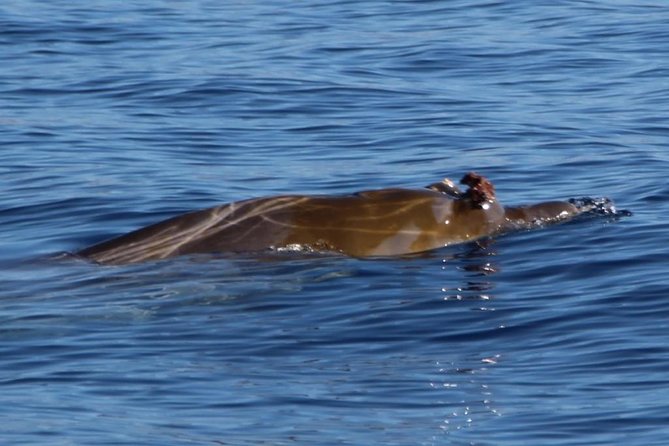
Once the boat leaves the marina, your biologist guide explains the marine life found around the island and the pressures that affect it. David is often the guide, and his style combines science with stories and humor. He explains how pilot whales can travel in family groups, how their behavior helps identify them, and how researchers gather information without interfering with normal activity.
You may hear about the unusual ocean conditions around Tenerife. The island’s steep volcanic shape gives the nearby sea great depth, which helps support short-finned pilot whales and other cetaceans. The crew can also explain how these whales search for squid in dark water far below the surface. This context makes a quick sighting more meaningful. You begin to understand why a whale surfaces at a certain angle or why the boat pauses in one place.
The pace is calm. This is not a nonstop narrated ride with music and constant movement. At times, the engine is slowed or stopped while everyone watches the water. You will need patience and a willingness to scan the sea. That quiet time is part of the experience, but it may feel slow if you expect guaranteed action every few minutes.
Watching pilot whale families from water level
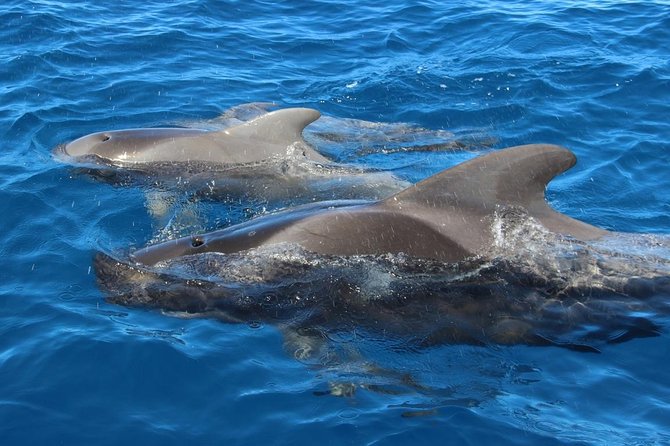
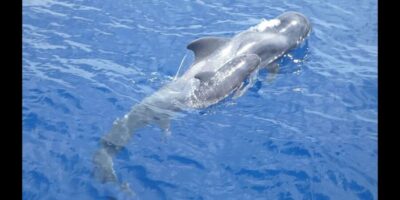
Pilot whales are the main attraction, and the crew may recognize some individuals from their photo catalogue. A family group can include adults and babies, giving you a chance to see social behavior rather than just one animal passing by.
The guides focus on respectful viewing. They do not chase whales or force the boat into the middle of a group. If several other boats are already around the animals, the crew may move away to avoid adding noise and pressure. That can mean giving up a closer look, but it also shows that the wildlife policy is not just a slogan.
When the animals approach on their own, the result can be excellent. Pilot whales and dolphins have been seen close to the boat, sometimes near enough for clear views of their bodies and fins. Still, conditions change from day to day. A responsible operator cannot promise a certain species, a certain number of animals, or a perfect photograph.
The crew records sightings and watches for details that help identify individual whales. You might see them compare a dorsal fin with the photographs they carry. That small research-minded touch makes the outing feel connected to long-term observation rather than a single holiday snapshot.
Same island, a completely different kind of day:
- Siam Park Entry Tickets
★ 4.5 · 15,710 reviews - Tenerife: Eco-Yacht Whale and Dolphin Watching and Swimming
★ 4.7 · 15,619 reviews - Los Cristianos Respectful No-Chase Whale and Dolphin Safari
★ 4.6 · 12,782 reviews - Tenerife: Loro Parque Entry Ticket
★ 4.8 · 12,411 reviews
Hearing whales through the hydrophone
The hydrophone is one of the strongest reasons to choose this trip over a standard boat ride. When the boat reaches a suitable sighting area, the crew can switch off the engines and lower the listening device into the sea. You then hear the sounds used by whales for communication and hunting.
The effect is quite different from watching a blow or a fin. The ocean becomes quiet, and the calls give you a sense of a hidden world below the surface. The guide explains what you are hearing and links the sound to the animals’ behavior. You do not need specialist knowledge to enjoy it. The point is simply to pay attention to something you would never notice from shore.
Stopping the engines also helps reduce disturbance. It gives everyone a better chance to watch naturally, and it keeps the boat from pressing forward into the group. Expect pauses and stillness here. This is an observation trip, not a high-speed chase.
Dolphins, turtles, seabirds, and surprise sightings
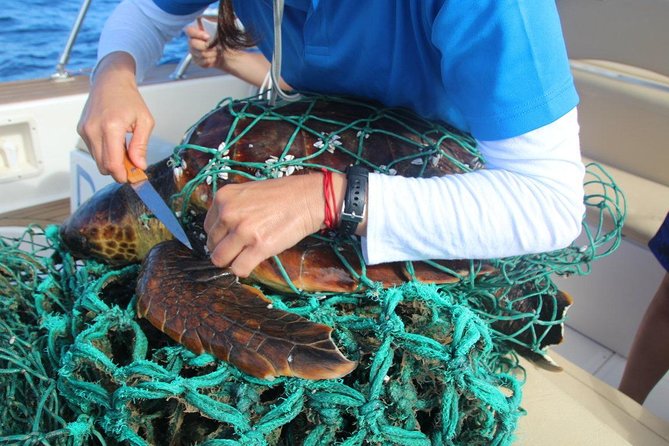
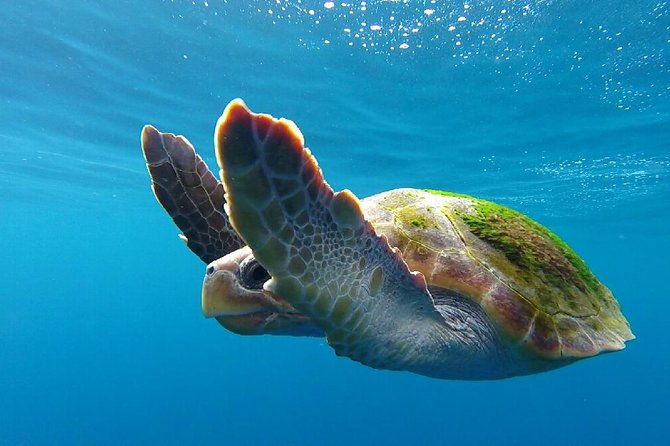
Pilot whales are the likely focus, but the surrounding water can produce a wider mix of life. Dolphins have been seen in more than one type, and some groups have come right alongside the boat. Sea turtles, including loggerhead turtles, have also been spotted.
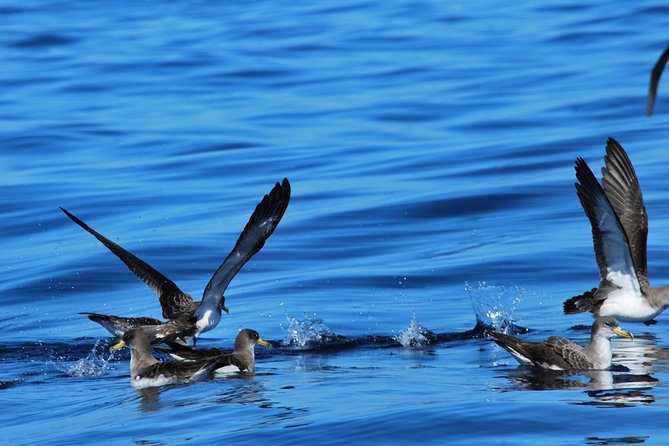
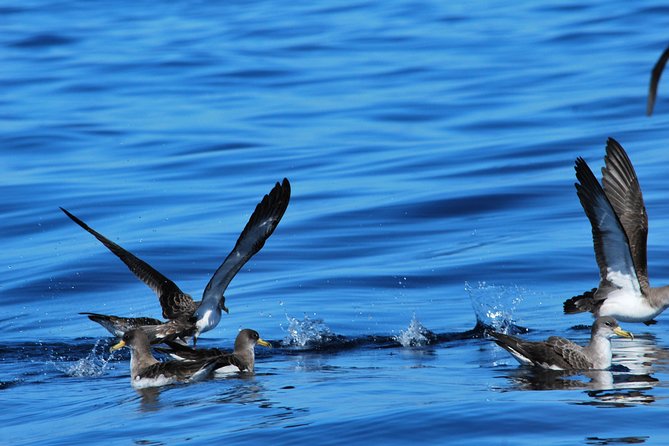
Keep looking up as well as down. Flying fish and seabirds can appear during the ride, with Cory’s shearwaters among the birds identified on outings. A larger whale, possibly a fin whale, has also been seen, and one trip included three orcas. Those sightings are unusual possibilities, not promises, so book this for the quality of the approach rather than a checklist of species.
The crew may collect floating plastic when it is safe to do so. This is a small action, but it fits the wider message of the trip: the ocean is not a stage set for entertainment. It is a living place that needs protection. You may leave with a sharper eye for litter and boat behavior than you had before.
Why the small group matters
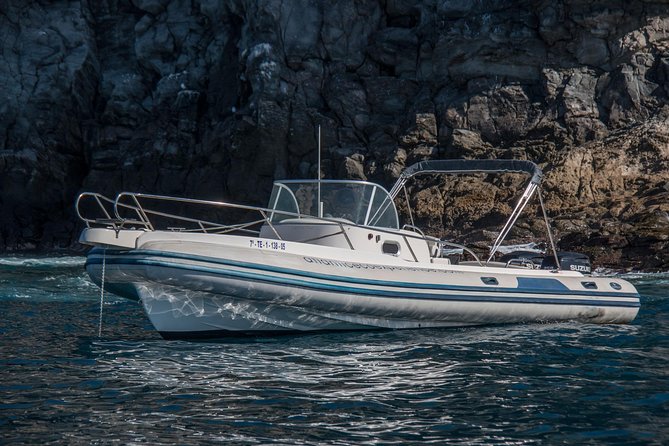
The 10-person limit is the most practical feature of the trip. It gives you better access to the guide, more room to see around the boat, and less chance of being stuck behind a wall of people when an animal surfaces.
It also changes the social feel. A small group can ask questions as the boat moves, and the guide can adjust explanations for children and adults. Families have included children as young as seven, while groups have also included older adults. The educational side works well for mixed ages because the guides explain complex ideas in clear terms.
Small does not mean private. You may share the boat with people speaking different languages, and the experience can be sociable. If you want a completely private charter, confirm the arrangement before booking. The standard promise is a maximum of 10 people, not an automatic private boat.
Comfort, clothing, and sea conditions
Plan for full sun. A hat with a chin toggle is useful because wind can catch loose headwear. Bring sunglasses, apply plenty of sunscreen, and carry water. A cold drink may be offered during the trip, and there are toilet facilities below deck.
The boat is exposed, so you should dress for sun and wind rather than assume the marina temperature will tell you what it feels like offshore. Sea conditions can change, and even a sturdy boat will move in rough water. One passenger described becoming ill despite taking precautions, so motion sickness is the main practical concern.
Most people can take part, and service animals are allowed. Access to the boat depends on the type of reduced mobility and the sea conditions, so contact Atlantic Eco Experience before booking if you need specific assistance. The crew can give a more useful answer than a general accessibility label.
Price, timing, and cancellation details
At $71.35 per person, the trip sits above a basic sightseeing cruise but offers more individual attention. You are paying for a 2.5-hour outing, a maximum 10-person group, a biologist guide, a skipper, wildlife interpretation, and the hydrophone session. The crew’s conservation approach also adds value if you want your money to support a lower-impact style of marine tourism.
The activity is offered in English. Confirmation is sent within 48 hours of booking, subject to availability, and it is often reserved around 17 days ahead. That suggests booking before your holiday rather than waiting until the last morning, especially if your dates are fixed.
You can cancel for a full refund up to 24 hours before the scheduled start. Changes or cancellations inside that period are not refunded. Poor weather or failure to reach the minimum number of participants can cancel the trip, in which case you are offered another date or experience, or a full refund.
Who should book this experience
I would choose this trip if you care about how wildlife is watched, not just about seeing something large in the water. It suits families, couples, solo visitors, and anyone who prefers a quiet boat with room to ask questions. Children who enjoy animals can get a proper introduction to marine biology rather than a short photo stop.
It is also a good fit for repeat whale watchers. The photo identification work, underwater sound, and local species information add detail beyond a standard sightseeing ride. You may not see something rare, but you are likely to gain a better sense of what ordinary, healthy wildlife observation looks like.
I would hesitate if your top priority is speed, guaranteed sightings, a meal, alcohol, or entertainment. You may spend part of the trip floating and waiting. That is exactly what makes the approach more respectful, but it requires a calm attitude.
Should you book the Atlantic Eco Experience?
Yes, if you want a small, careful, science-led trip from Costa Adeje. David’s explanations, Mirna’s calm boat handling, the low position of Papacho 2, and the hydrophone give the outing real substance. The crew’s willingness to turn off the engine, avoid crowded sightings, and remove plastic adds credibility to the eco focus.
Book it with realistic expectations. Nature sets the schedule, and rough seas or empty water are always possible. Bring sun protection, prepare for motion, and choose this trip because you want to observe marine life responsibly. For that kind of visitor, $71.35 is a fair price for 2.5 hours on the water and a much more personal experience than a large sightseeing boat.
FAQ
Where does the cetacean tour leave from?
The meeting point is Av. de Colón, 4, 38660 Costa Adeje, Santa Cruz de Tenerife, at Puerto Colón. The activity returns to the same meeting point.
How long does the experience last?
The tour lasts approximately 2 hours and 30 minutes.
How many people can join the boat trip?
The boat has a maximum capacity of 10 passengers.
What marine life might I see?
The tour looks for pilot whales, dolphins, and porpoises. You might also see sea turtles, seabirds, flying fish, and occasionally a larger whale or other cetacean.
Is the tour suitable for people with reduced mobility?
Most people can participate, and service animals are allowed. Access to the boat depends on the type of reduced mobility and sea conditions, so contact Atlantic Eco Experience before booking for specific advice.
What happens if the weather cancels the trip?
If poor weather cancels the experience, you are offered a different date or a full refund. You can also receive a full refund if you cancel at least 24 hours before the scheduled start time.
Just added around Tenerife
- 3h Whale Watching Private tour Beneteau Oceanis 440★ 5.0 · 3 reviews
- Tenerife: Photography Sessions – Families, Couples, Friends★ 5.0 · 26 reviews
- Quad tour (option : Teide morning or Sunset tour)★ 4.5 · 26 reviews
- Beginner Scuba Dive with Scubapoint Tenerife in Turtle Area★ 4.7 · 8 reviews
- Tenerife: 2 Diving Sessions for Certified Divers★ 4.2 · 7 reviews
- small group surf lesson in Playa de las Américas,Tenerife★ 5.0 · 31 reviews
- sunset stand up paddle★ 5.0 · 29 reviews
- Yoga at the beach in Tenerife★ 5.0 · 21 reviews
Costa Adeje Tours, compared.
Whale & Dolphin Eco-Cruise with Snacks & Drinks
Read our review →
Whale and Dolphin Watching Catamaran with Transfer and Buffet
Read our review →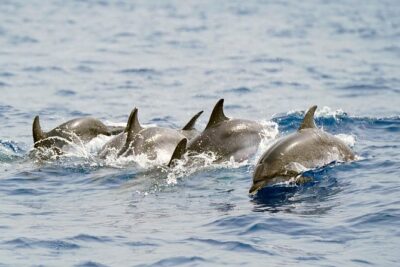
Whale Watching Eco-Adventure from Costa Adeje
Read our review →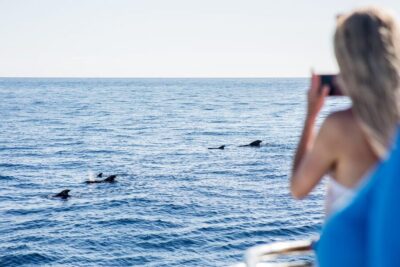
Whale and Dolphin Cruise with Food and Pickup
Read our review →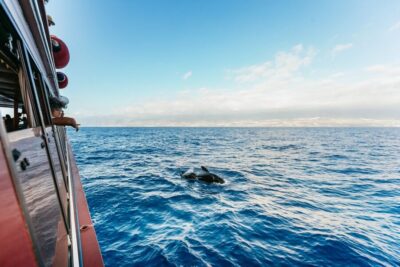
Whale and Dolphin Watching Cruise with Lunch and Swim
Read our review →
Browse the lists this tour appears in